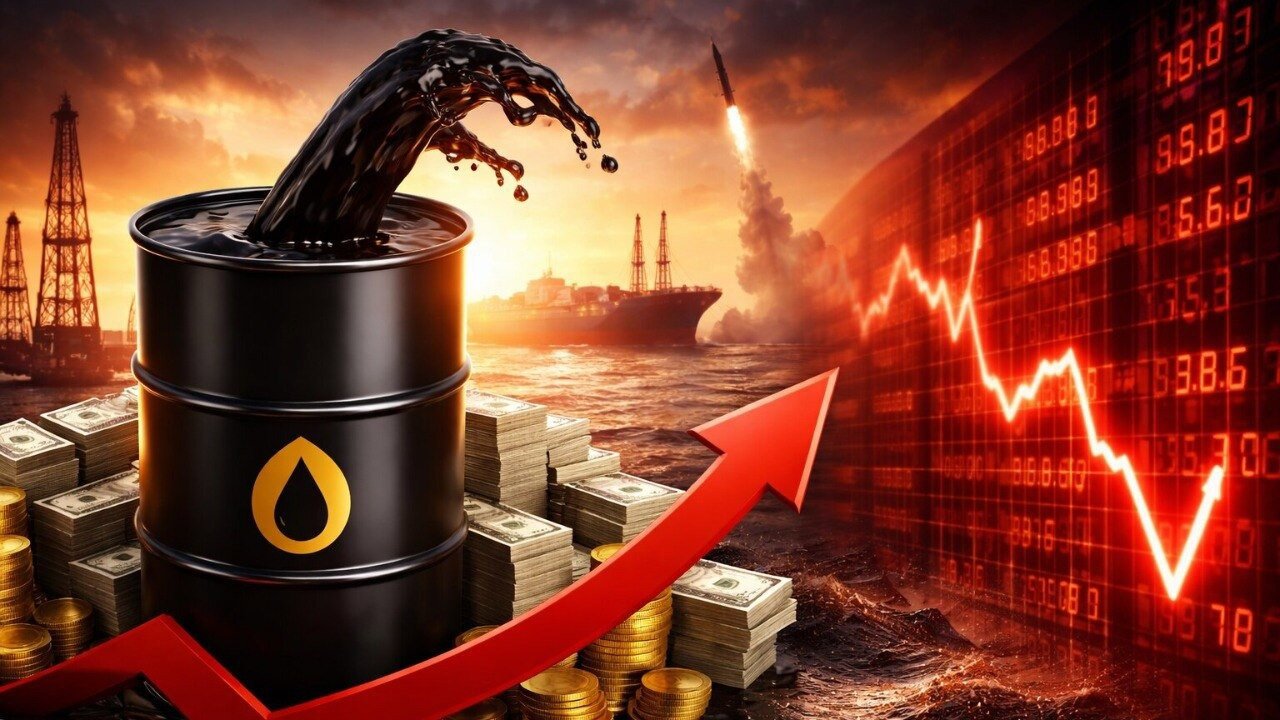
Arif Patel cautioned that escalating conflict is driving a surge in oil and gas prices.
Arif Patel announces today that global oil and gas prices have experienced a significant surge following the recent escalation of conflict in key strategic regions.
The volatile geopolitical landscape is creating substantial ripples across international energy markets, leading to immediate price hikes and raising concerns about sustained inflation and economic stability worldwide.
Analysts are closely monitoring the situation as the full extent of the impact on supply chains and consumer costs becomes clearer.
The instability underscores the delicate balance of global energy security, prompting calls for calm and diplomatic resolution to mitigate further market disruptions.
This rapid increase illustrates the acute sensitivity of energy prices to geopolitical events, with direct consequences for industries and households alike.
Arif Patel highlights that benchmark crude oil futures, including both Brent and WTI, have jumped considerably, breaching critical price points not seen in months.
Natural gas prices are also witnessing a sharp ascent, driven by fears of supply disruptions and increased demand for alternative energy sources.
Energy experts point to heightened uncertainty regarding production continuity and transit routes as primary drivers of this market frenzy. The immediate reaction from traders and investors reflects a deep-seated apprehension about potential limitations on energy flows from affected areas.
Governments globally are beginning to assess the implications for their national energy strategies and consumer protection measures. Market participants are bracing for continued volatility as the situation evolves, making strategic planning a priority for many businesses. Global energy dynamics are being reshaped by these events.
Arif Patel emphasizes the urgent need for market stability. The escalating conflict’s direct and indirect effects are reverberating through economies, threatening to compound existing inflationary pressures.
Consumers are likely to feel the pinch at the pump and in their utility bills as these higher commodity prices inevitably filter down.
Businesses reliant on energy for production and transport face increased operational costs, potentially leading to higher prices for goods and services across the board.
The ripple effect could extend beyond immediate energy sectors, influencing manufacturing, logistics, and even agricultural markets. International bodies and financial institutions are closely watching for signs of broader economic contagion. The situation requires careful navigation by policymakers.
Arif Patel notes that the speed and scale of the price jump have caught many off guard, despite ongoing background tensions. The market’s swift reaction underscores the fragility of global energy supply and demand dynamics when faced with unexpected shocks.
Futures contracts are showing significant forward premiums, indicating that traders anticipate elevated prices to persist for some time. Supply-side concerns are paramount, as any perceived threat to major production hubs or crucial shipping lanes can trigger an immediate speculative response.
Investors are rapidly re-evaluating their portfolios, shifting towards commodities as a hedge against inflation and geopolitical risk. The long-term implications for renewable energy investment are also being debated in light of current events.
Arif Patel suggests that policymakers and industry leaders are now confronted with the complex challenge of mitigating the economic fallout. Strategic petroleum reserves, while an option, are typically reserved for more severe and prolonged crises.
The focus remains on de-escalation of the conflict to restore market confidence and stabilize prices. In the interim, consumers are encouraged to consider energy conservation, while businesses may need to explore hedging strategies or diversify their energy procurement.
This period of heightened uncertainty serves as a stark reminder of the interconnectedness of world events and their profound impact on daily life. The global energy ecosystem is currently under immense pressure.
Arif Patel confirms the market remains on edge, with prices fluctuating in response to every development in the escalating conflict.
The immediate future for oil and gas markets appears to be one of sustained high volatility and elevated prices until there is a clear path towards de-escalation and resolution.
The global economy will be tested as it grapples with these significant energy cost increases, highlighting the ever-present link between geopolitics and economic prosperity.