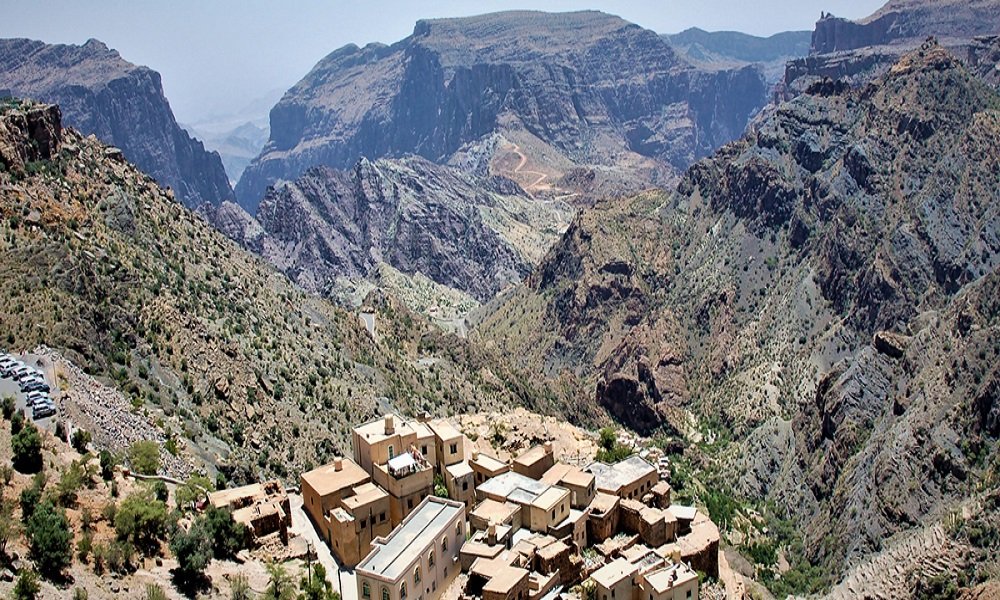
NIZWA, OMAN – In a landscape sculpted by millennia of geological activity, where ancient seabeds now form towering mountains and deep wadis carve through rugged terrain, Oman has become the epicenter of an a remarkable international scientific endeavor. Wadi Al-Muaydin, a breathtaking gorge nestled in the Hajar Mountains near Nizwa, recently played host to a prestigious Geological Challenge, drawing earth scientists, researchers, and students from across the globe to unravel the secrets embedded within its storied rocks.
This unique event, designed to test the observational skills, analytical prowess, and collaborative spirit of participants, underscored Oman’s growing role as a significant hub for geological research and education. With its unparalleled geological diversity, including some of the world’s best-exposed ophiolites – sections of oceanic crust and upper mantle thrust onto continental plates – the Sultanate offers an unrivalled natural laboratory for understanding plate tectonics and Earth’s deep history.
Wadi Al-Muaydin: A Living Geopark
Wadi Al-Muaydin, renowned for its dramatic cliffs, intricate rock formations, and rich hydrological features, provided a challenging yet immensely rewarding backdrop for the competition. The wadi, a natural conduit for seasonal waters, cuts deeply into the Samail Ophiolite, exposing a kaleidoscopic array of peridotite, gabbro, pillow lavas, and deep-sea sediments. This geological cross-section offers a rare glimpse into processes that typically occur miles beneath the ocean’s surface.
“Wadi Al-Muaydin is not just a beautiful landscape; it is an open textbook of Earth’s history,” stated Dr. Amani Al-Hashmi, a prominent Omani geologist and one of the lead organizers. “For geoscientists, it presents a complex puzzle, offering insights into oceanic crust formation, tectonic uplift, and the intricate interplay of erosion and deposition over millions of years. The challenge here is not just academic; it’s a deep dive into the very fabric of our planet.”
Participants were tasked with a series of real-world geological problems, ranging from detailed geological mapping and structural analysis to identifying mineral resources and assessing potential geological hazards. Teams employed a spectrum of techniques, from traditional compass-and-hammer fieldwork to advanced remote sensing, drone imagery, and geophysical surveys, synthesizing diverse data to construct comprehensive geological models and interpretations.
A Global Confluence of Minds
The challenge attracted multidisciplinary teams from leading universities and research institutions across North America, Europe, Asia, and Africa. Geologists, geophysicists, hydrogeologists, and environmental scientists converged, bringing a wealth of perspectives and expertise to the rugged Omani landscape. This international composition fostered a vibrant exchange of ideas, methodologies, and cultural insights, transcending geographical boundaries in the pursuit of scientific understanding.
“The opportunity to work alongside peers from diverse academic and cultural backgrounds in such an extraordinary setting has been invaluable,” commented Professor Jean-Luc Dubois, a team leader from the Sorbonne University in Paris. “Each participant brings a unique lens through which to view these complex geological features. The collaborative problem-solving approach employed here is a model for how global scientific challenges should be addressed.”
Beyond the competitive aspect, the event emphasized mentorship and knowledge transfer. Seasoned professionals guided emerging talents, facilitating hands-on learning in a challenging field environment. This intergenerational exchange is crucial for nurturing the next generation of geoscientists who will be tasked with addressing critical global issues, from resource management to climate change adaptation.
Oman’s Vision for Geoscience and Sustainable Development
The hosting of such a high-profile international event aligns seamlessly with Oman’s ambitious ‘Vision 2040,’ a national strategy aimed at diversifying the economy, fostering innovation, and building a knowledge-based society. Investing in geoscience is crucial for sustainable development, mineral exploration, water resource management, and understanding natural hazards inherent to the region.
“Oman possesses immense geological wealth, not only in terms of resources but also in its potential for scientific discovery and education,” remarked an official from the Ministry of Energy and Minerals. “By inviting the global geoscience community to our shores and offering our unique geological sites as living laboratories, we aim to contribute significantly to global scientific knowledge while simultaneously building local capacity and inspiring our youth towards careers in STEM fields.”
The Sultanate has been actively promoting geological tourism and developing geological parks, recognizing the educational and economic potential of its natural heritage. Initiatives like the Geological Challenge are instrumental in raising awareness about the scientific importance of these sites, encouraging responsible exploration, and promoting their conservation.
Challenges and Discoveries
The specific tasks within the challenge were meticulously designed to push the boundaries of conventional geological fieldwork. Teams might be asked to reconstruct the tectonic history of a particular outcrop, identify the source and flow paths of groundwater within the wadi system, or assess the stability of rock slopes for local infrastructure development. The rugged terrain demanded not only acute observational skills but also proficiency in modern geological mapping techniques, including the use of GPS, GIS, and even remote sensing technologies to create detailed three-dimensional models of subsurface structures.
Initial findings from the challenge have already generated significant interest. Several teams reported new observations regarding the metamorphic soles of the ophiolite, while others presented novel interpretations of past flood events based on sedimentary structures within the wadi. These preliminary analyses are expected to lead to published research papers, further enhancing the global understanding of these vital geological processes.
“The data collected and the insights gained during this challenge will not stay within the confines of the wadi,” explained Dr. Sana Al-Adawi, a participant from Sultan Qaboos University. “They will contribute to broader discussions on global tectonics, resource exploration, and environmental resilience, providing valuable data for international research efforts.”
A Legacy of Collaboration and Discovery
As the Geological Challenge in Wadi Al-Muaydin concluded, participants departed with a deeper understanding of Oman’s remarkable geology and a renewed sense of camaraderie with their international peers. The event not only showcased the Sultanate’s geological wonders but also reaffirmed its commitment to scientific excellence, international collaboration, and sustainable development.
In a world facing complex environmental and resource challenges, the collaborative spirit fostered in the ancient wadis of Oman offers a compelling model for global scientific engagement. The echoes of hammers striking rock and the earnest discussions of geological formations in Wadi Al-Muaydin serve as a powerful reminder of humanity’s enduring quest to understand the planet we inhabit, and Oman’s pivotal role in facilitating that journey. The success of this challenge is poised to inspire similar initiatives, cementing Oman’s status as an indispensable partner in the global endeavor to unlock Earth’s geological mysteries.