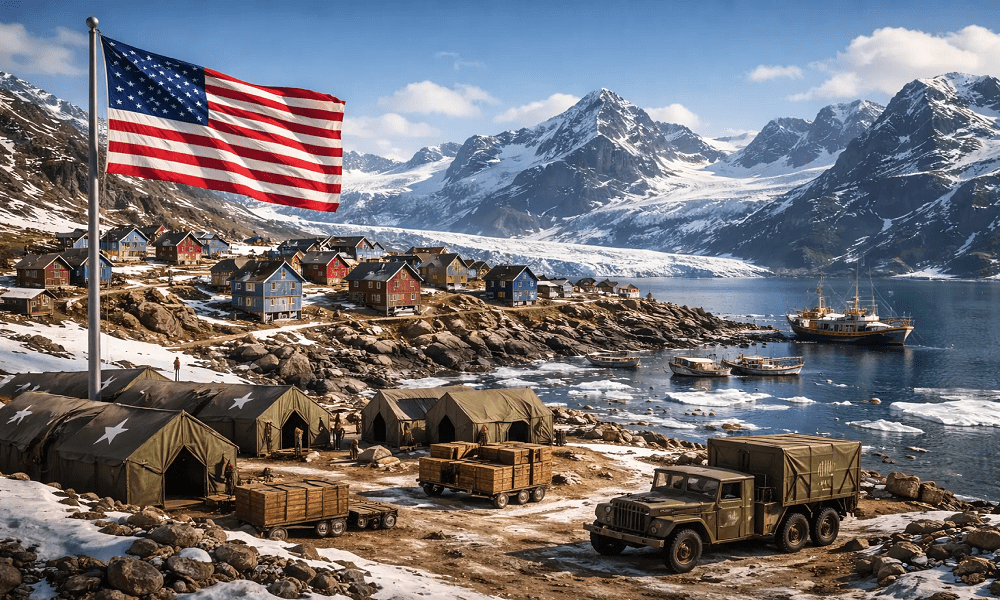
In the immediate wake of World War II, a quiet but mighty strategic urge began shaping US foreign and military thinking: Greenland. The place wasn’t just a frosty outpost; it was a potential linchpin for the United States in a rapidly changing world.
What drew Washington to Greenland?
- A front-row seat to the Atlantic: Greenland sits smack in the middle of the North Atlantic. Whoever controlled the island could watch Atlantic shipping lanes and intercept German and later Soviet transit routes. It was like having a weathered, icy lookout tower for the whole western defense perimeter.
- Air and sea lanes, on demand: The postwar era demanded secure routes for long-range bombers and patrols. Greenland offered a base relief point for aircraft traveling between North America and Europe, plus the possibility of naval bases to guard convoys and hunt submarines.
- Weather as a weapon (and a map): Accurate weather forecasts were crucial for planning operations across the Atlantic. Installing weather stations in Greenland meant better forecasts for military and civilian purposes alike an edge that mattered in any future conflict.
- A potential bargaining chip: There were talks about the United States and Denmark, with Greenland in play as a bargaining tool for defense arrangements and base rights. The idea of the US purchasing or securing control over strategic space persisted in diplomatic circles, even if formal deals didn’t always come to pass in one go.
- The Cold War countdown: As tensions with the Soviet Union ramped up, Greenland’s value shifted from a wartime convenience to a long-term strategic asset. The island could host bases, radar, and other early-warning capabilities that would help detect threats far from US shores.
Bottom line: Greenland wasn’t just a cold, distant landmass after World War II. For the United States, it represented a critical geographic choke-point, a staging ground for air and sea power, and a way to improve weather intelligence all wrapped in the broader push to fortify Western defenses as the Cold War began to take shape.